

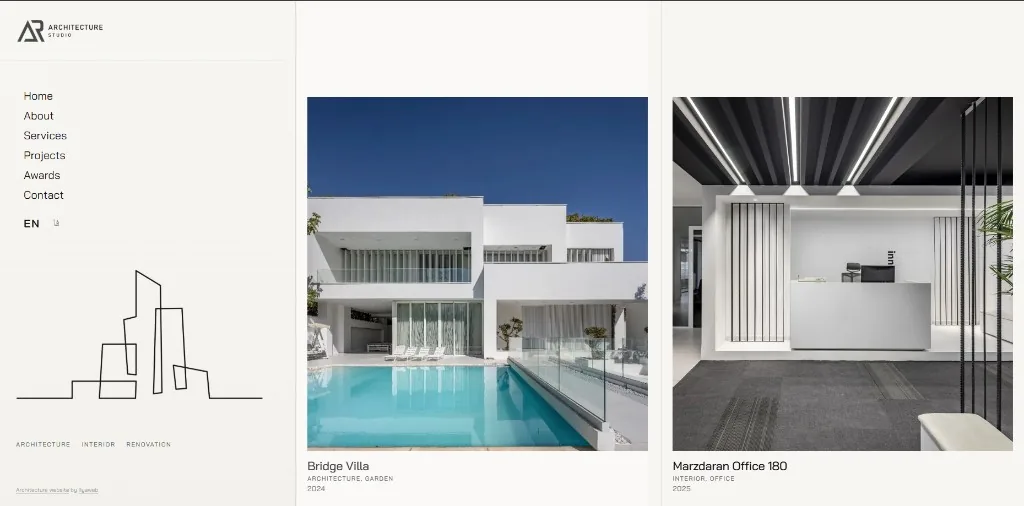
Why architecture websites need a different approach
A generic corporate template rarely matches how architecture and design clients research a practice. Visitors expect strong visuals, readable project stories, and a clear path to discuss a new commission — without waiting for oversized images to load.
This page is for studio portfolios, project storytelling, credentials, and inquiry flows. It is not a property listings portal. For listings, filters, and agent workflows, see real estate website design. For a broader company site without a design portfolio focus, see corporate website design.
Delivery can use WordPress for editable portfolios or custom development when filtering, roles, or integrations go beyond a standard CMS. IlyaWeb has representative offices in Dubai, London and New York, and works with international clients remotely — we do not invent awards, clients, or results.
- Strong visual presentation of built and conceptual work
- Project-specific storytelling with adaptable fields
- Careful handling of architectural photography on mobile
- Clear services, team, and credentials where relevant
- Categories and filtering when you have enough meaningful projects
- A practical inquiry path for new commissions
Solutions by practice type Discuss your architecture project
Audiences
Solutions by practice type
Prioritized segments — not a claim that IlyaWeb has completed projects for every category. Scope is written per engagement.
Architecture studios
Project portfolio, detail pages, design approach, team profiles, categories, and commission inquiries.
Interior design studios
Photography-led galleries, residential/commercial categories, material notes, and consultation requests.
Engineering consultancies
Disciplines, capabilities, selected experience, credentials, industries served, and inquiry forms.
Construction & contracting
Project history, capabilities, service categories, and quotation or tender inquiries when appropriate.
Landscape & urban planning
Site and landscape projects, concept-to-delivery imagery, and service explanations.
Also see: all industries · web design · corporate websites
How project portfolios should work
Substantial projects deserve dedicated pages. Fields adapt to what you can publish — not every project needs every field, and confidential material stays offline.
A typical project page can include title, type, location when public, year or stage when verified, authorized client names, services provided, team credits, brief and objectives, design or technical challenges, drawings and photographs, and outcomes when documented.
Portfolio usability we plan for
- Readable project stories alongside imagery
- Categories such as residential, commercial, hospitality, or renovation when content justifies them
- Responsive galleries without loading every full-resolution file on first paint
- Meaningful alt text for published images — not keyword stuffing
- Editable project content so your team can publish after handover when scoped
What we do not do
We do not invent clients, awards, testimonials, budgets, or unpublished drawings. We do not expose private addresses or unauthorized photographs. Empty filter categories are avoided.
Capabilities
What we typically build for architecture practices
Final deliverables are written into the project scope before implementation.
Project portfolio system
Index and detail layouts for images, drawings, and narrative.
Studio narrative
Approach, services, and team pages without generic filler.
Commission inquiry flow
Forms that capture brief context for new project conversations.
Visual performance
Image-heavy pages planned for mobile and Core Web Vitals basics within scope.
Technical SEO foundations
Titles, headings, crawlable project URLs, and sitemap inclusion for publishable work.
Optional advanced needs
Custom filters, multilingual structure, or client portals when requirements justify them.
Delivery
How an architecture website project runs
Timing depends on portfolio size, content readiness, approvals, and technical complexity — we do not promise one fixed duration for every studio.
-
Discovery
Practice type, audiences, must-have pages, and content constraints.
-
Scope & estimate
Written features and a USD starting estimate or custom quote.
-
IA & visual direction
Portfolio structure, navigation, and design direction for review.
-
Design approval
Key layouts agreed before full build.
-
Build & content
Implementation, galleries, and project content integration.
-
Testing
Responsive, forms, and image behavior checks against the scope.
-
Launch & handover
Go-live, access, and training when included — optional support afterward.
International projects receive a starting estimate or a custom quote in USD. See pricing factors.
Before you inquire
What to prepare for a useful estimate
-
Practice type
Architecture, interior, engineering, construction, landscape, or developer presentation?
-
Portfolio size
Approximate number of projects to publish at launch.
-
Assets
Authorized photos, drawings, and copy you can share.
-
Editing needs
Who will update projects after launch — and how often.
WordPress vs custom for architecture sites
WordPress is often suitable for image-led portfolios, service and team pages, and straightforward inquiry forms. Custom development may fit specialized filtering, complex workflows, client portals, or unusual multilingual requirements.
Neither path is universally better. The choice depends on content volume, editing needs, design ambition, budget, integrations, and maintenance expectations.
| Factor | WordPress | Custom development |
|---|---|---|
| Best when | Editable portfolios and standard studio sites | Highly customized portfolio UX or complex roles/integrations |
| Content updates | Editors manage projects in the CMS | Admin shaped to your publishing workflow |
| Galleries & performance | Strong with disciplined image and plugin choices | Built around your media and filtering rules |
| Client portals | Limited unless extended carefully | Designed when requirements justify it |
| Maintenance | Core, theme, and plugin updates | Planned releases on your codebase |
SEO for portfolio-based practices
Useful architecture SEO is structural: clear services, dedicated pages for substantial projects, descriptive titles, logical internal links, and image delivery that stays mobile-friendly. We do not promise rankings, leads, or traffic growth.
Confidential or incomplete projects should stay unpublished. Location claims should match where your practice actually operates.
- Service pages that explain what you offer
- Publishable project pages with original descriptions
- Meaningful alt text and responsive images
- Canonical URLs and sitemap inclusion for public pages
- Avoid thin location spam and near-duplicate project stubs
Architecture website pricing — what affects the estimate
We do not publish a fake international list price, and we do not convert Iranian package prices into USD without explicit confirmation. Projects receive a starting estimate or custom quote in USD based on scope.
| Factor | Why it matters |
|---|---|
| Project page count | More published projects mean more structure, media, and editorial work |
| Gallery complexity | Lightbox behavior, drawings, and mixed media increase effort |
| Custom visual design | Brand-specific layouts vs. a practical portfolio system |
| Content migration | Moving an old site’s projects, URLs, and media |
| Languages | Each language needs planned structure and content |
| Advanced filtering / portals | Custom features when WordPress patterns are not enough |
| Editorial support | Copywriting and image preparation when requested |
| Ongoing maintenance | Updates and support after launch when included |
International collaboration
IlyaWeb has representative offices in Dubai, London and New York. Architecture website projects for international clients are delivered remotely — discovery, written scope, design review, content integration, and handover.
Live examples below were delivered in Iran. They are real sites, not invented foreign case studies. We do not invent metrics or testimonials.
Company context: About IlyaWeb. Inquiry page: Contact.
Portfolio
Live IlyaWeb projects
These sites are online. Screenshots show each homepage. They were delivered in Iran and are not presented as local client references for other markets.
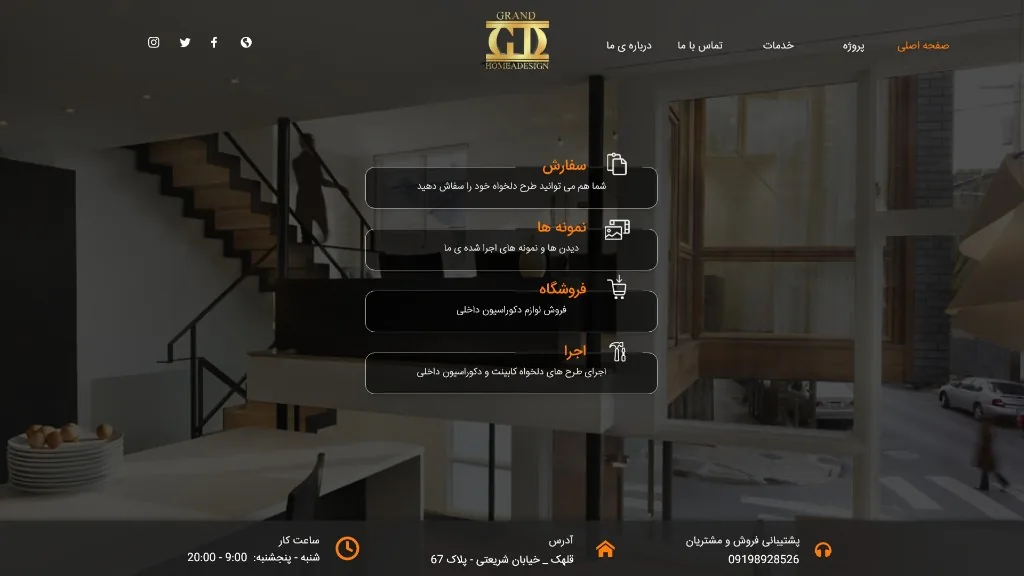
We do not invent client names, rankings, traffic, or revenue. Request a consultation
What should an architecture studio website include?
Typically: a clear homepage, project portfolio with detail pages, services or approach, team or credentials when relevant, and a commission inquiry path. Exact pages depend on the written scope.
Can each architecture project have its own page?
Yes for substantial, publishable projects. Thin stubs without useful content should not be mass-produced for SEO alone.
Can we organize projects by type?
Yes when you have enough meaningful categories — for example residential, commercial, hospitality, or renovation. Empty categories are avoided.
Can we showcase floor plans and technical drawings?
Yes when you have rights to publish them and they help clients evaluate your work. Confidential drawings stay offline.
How should large architectural images be optimized?
Use appropriate dimensions, modern formats where supported, responsive delivery, and lazy loading for galleries — without destroying visual quality. Exact technique depends on the stack and hosting.
Is WordPress suitable for an architecture portfolio?
Often yes for editable image-led portfolios and inquiry forms. See our WordPress page for platform details.
When is custom development necessary?
When specialized filtering, portals, unusual workflows, or integrations exceed a practical CMS setup. See custom web development.
Can our team update projects independently?
Usually yes on WordPress after handover and any agreed training. Custom builds include an admin experience defined in the scope.
Can the website support multiple languages?
Yes when languages are planned in the scope — not bolted on late.
Is this the same as a real estate website?
No. This page focuses on studio portfolios and professional presentation. Listings, property search, and agent workflows belong on the real estate page.
How is the project estimate calculated?
International projects use a starting estimate or custom quote in USD. Portfolio size, galleries, design depth, migration, languages, and optional advanced features affect cost.
Is ongoing maintenance available?
Yes, as an optional agreement after launch — see support and maintenance.
Contact
Discuss your architecture project
Tell us about your practice, portfolio size, and must-have features. We typically reply within one business day. Submitting opens WhatsApp or Telegram with your inquiry — or email info@ilyaweb.com.
Address
- DubaiBusiness Bay, Al Abraj Street
- LondonCanary Wharf, South Colonnade
- New YorkMidtown, Madison Avenue
In-person visits by appointment only