


What e-commerce development actually covers
An online store is a sales and operations system — not only attractive product pages. Catalog structure, cart and checkout, payments, shipping rules, order handling, and admin workflows all affect whether customers can buy and whether your team can fulfill.
Compared with a corporate website, commerce projects need product data, purchase flows, and post-order processes. Compared with a web application, most stores still center on catalog and checkout rather than complex internal systems.
IlyaWeb builds WordPress + WooCommerce stores when that platform fits, or custom commerce when business rules and integrations require it.
We are with representative offices in Dubai, London and New York, and work with international clients remotely. Representative offices in Dubai, London and New York; visits by appointment only. We do not claim guaranteed sales growth or guaranteed rankings.
Store types
What kind of online store do you need?
Identify the closest match. Exact scope is written after discovery — not every store needs every capability.
Standard retail store
Consumer products, categories, cart, and checkout for a conventional online shop.
Catalog with purchasing
Browseable catalog where selected items can be ordered online with clear product detail.
B2B commerce
Account-aware pricing, quote-oriented flows, or wholesale rules when discovery confirms the model.
Multilingual store
Product and checkout content planned for more than one language or market.
Large-catalog store
Many SKUs, attributes, imports, and filtering that need careful data structure.
Custom commerce platform
Specialized pricing, unusual workflows, or integrations that standard setups cannot support cleanly.
Related paths: WordPress / WooCommerce, custom development, support & maintenance.
Store capabilities we can implement
Capabilities below are configurable. Only items written into the project scope are included. Complex payments, shipping, ERP, or tax rules need discovery before a firm quote.
We do not promise a specific payment provider, bank, shipping carrier, or ERP connector without verifying eligibility, APIs, and merchant requirements for your country and markets.
Product catalog
- Categories and subcategories
- Product variants, attributes, and specifications
- Image galleries and product detail layouts
- Search and filtering suited to catalog size
- Stock availability signals when inventory is managed
- Imports and bulk updates when product data is prepared
Shopping experience
- Product detail pages with clear pricing and options
- Shopping cart with editable quantities
- Guest checkout and/or customer accounts when needed
- Mobile-friendly checkout forms
- Transparent shipping and payment information on the path to purchase
- Order confirmation and customer notifications when configured
Store operations
- Order status management for your team
- Inventory workflows within the agreed model
- Discount and coupon rules when required
- Returns and refunds handling where the platform and policies allow
- Basic reporting and staff roles when scoped
Integrations (when eligible)
- Payment gateways available for your merchant status and target markets
- Shipping services and rate rules where APIs or plugins support them
- Accounting, ERP, or CRM connections after technical discovery
- Analytics and marketing tags when accounts and goals are agreed
- External product or inventory APIs when documentation and access are provided
Buying experience
Product pages and checkout that reduce friction
Clear information and usable forms help shoppers complete purchases. We do not claim a specific conversion rate or sales increase.
Product clarity
Titles, specs, images, price, and availability presented so shoppers can decide without guessing.
Checkout usability
Readable fields, mobile controls, understandable errors, and editable cart contents within scope.
Trust cues on the path
Shipping, payment, and policy information visible where buyers expect them — not buried after payment.
Accessibility basics
Keyboard-friendly forms and practical contrast targets within the agreed design and platform limits.
Delivery
How an e-commerce project runs
Catalog, workflows, platform choice, and integrations are clarified before major implementation.
-
Discovery
Products, variants, markets, languages, payments, shipping, and must-have operations.
-
Catalog & workflow plan
Data structure, purchase path, and admin responsibilities mapped to phases.
-
Approach & quote
WooCommerce or custom recommendation with written scope and USD estimate.
-
Design & approval
Key store and product layouts reviewed before build.
-
Build & integrate
Catalog, checkout, payments, and agreed connectors implemented.
-
Test purchase flows
Cart, checkout, notifications, and order handling checked against the scope.
-
Launch & handover
Go-live steps, access handover, and optional training.
-
Optional support
Ongoing care only when covered — see support.
International projects receive a starting estimate or a custom quote in USD. See pricing factors.
Client inputs
What you typically need to provide
-
Product data
Names, SKUs, variants, prices, stock rules, and descriptions — even if incomplete at kickoff.
-
Media & brand
Product images, logos, and brand guidelines when available.
-
Shipping rules
Zones, methods, and how delivery costs should be calculated.
-
Payment credentials
Merchant accounts and gateway access for markets you are eligible to sell in.
WooCommerce vs custom e-commerce development
WooCommerce is often appropriate for conventional retail stores, content-led commerce, and many small or medium catalogs. Custom development may fit specialized pricing, unusual workflows, or integrations that cannot be implemented efficiently on a standard stack.
We recommend the simplest reliable approach that meets current requirements and realistic growth — not custom for its own sake.
| Factor | WooCommerce | Custom commerce |
|---|---|---|
| Best when | Standard retail catalog, content pages, and common checkout needs | Special pricing, multi-step operations, or platform limits block delivery |
| Time to launch | Often faster for conventional scopes | Longer; phased delivery is common |
| Initial cost | Usually lower for standard stores | Higher effort for unique logic and integrations |
| Catalog complexity | Strong for many product/variant setups | Designed around unusual data or rules |
| Content management | Editors manage products and pages in WordPress | Admin UX built to match your operations |
| Checkout customization | Flexible within WooCommerce patterns and plugins | Built for specific checkout and order rules |
| Payments & shipping | Via eligible plugins/gateways for your markets | Integrated to confirmed providers and APIs |
| Inventory & orders | Native tools plus agreed extensions | Modeled to your fulfillment process |
| Maintenance | WordPress/WooCommerce updates and plugin discipline | Planned releases on your codebase |
| Extensibility | Good within ecosystem limits | Stronger when requirements are unusual |
Selling across borders — what to plan
Cross-border commerce depends on your merchant eligibility, target markets, and chosen platform — not only on website design.
Payment providers, banks, shipping carriers, tax rules, and legal obligations vary by country and business status. IlyaWeb can help implement agreed technical configurations; we do not guarantee access to a specific provider or provide legal, tax, or regulatory compliance advice.
Remote collaboration through our Dubai, London and New York offices is our default for international clients. Confirm payment and contracting arrangements during scoping.
- Multiple languages and localized product content
- Currencies and price presentation rules
- Market-specific payment methods you are eligible to use
- Shipping zones, methods, and delivery estimates
- Tax configuration according to your advisors and platform capabilities
- Returns, refunds, and country-specific product restrictions
- Regional analytics when measurement accounts are ready
E-commerce pricing — what affects the estimate
We do not publish a fake list price. International store projects receive a starting estimate or a custom quote in USD based on scope.
A standard WooCommerce store and a custom commerce platform are priced differently. Package figures on other language versions of the site are not automatically applicable to international work unless explicitly confirmed.
| Factor | Why it matters |
|---|---|
| Product count & variants | Larger catalogs and complex attributes need more data and template work |
| Design requirements | Brand-specific product and checkout UI depth increases effort |
| Content & migration | Imports, redirects, and media processing take dedicated time |
| Checkout customization | Unusual fields, steps, or validations need extra build and testing |
| Payments & shipping | Each gateway and carrier setup depends on eligibility and APIs |
| Inventory & orders | Custom fulfillment rules cost more than standard order status flows |
| Languages & currencies | Each market adds content structure and configuration |
| ERP / CRM / accounting | Integrations require discovery, credentials, and test environments |
| Security & maintenance | Hardening, updates, and ongoing support are scoped when required |
How we work with international clients
IlyaWeb has representative offices in Dubai, London and New York. E-commerce projects for international clients are delivered remotely — discovery calls, shared documents, staging demos, and written acceptance criteria.
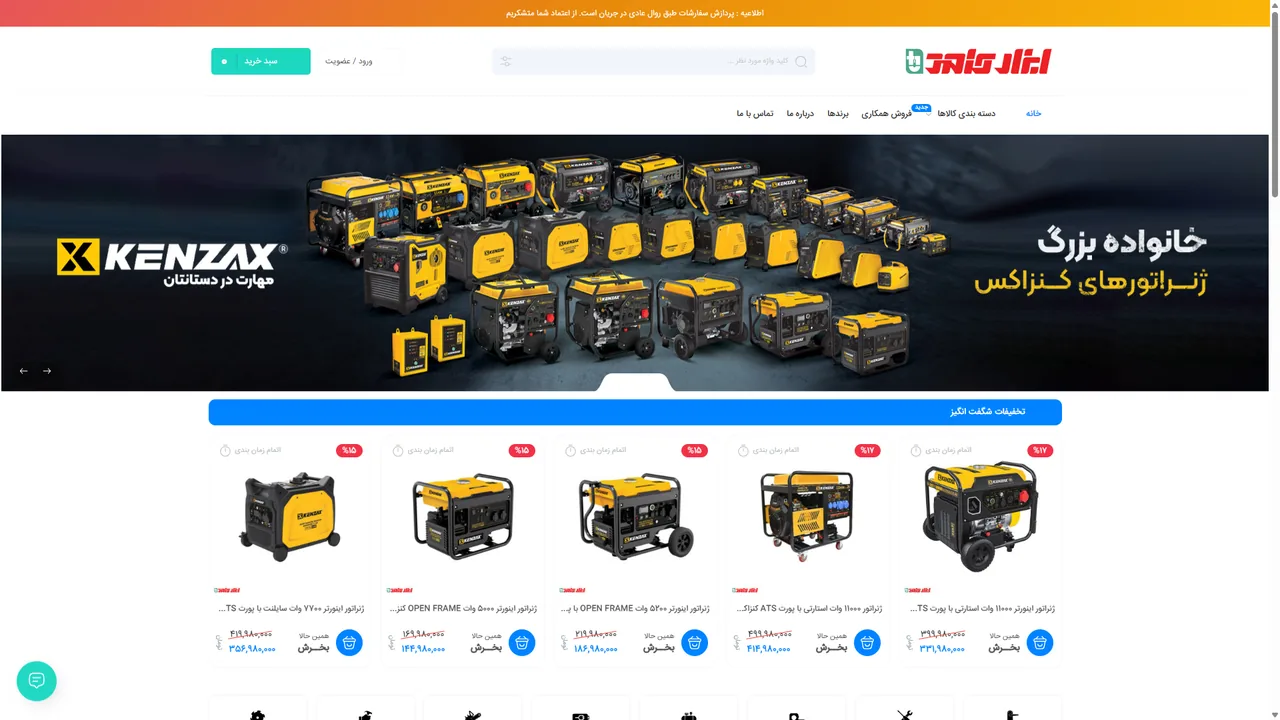
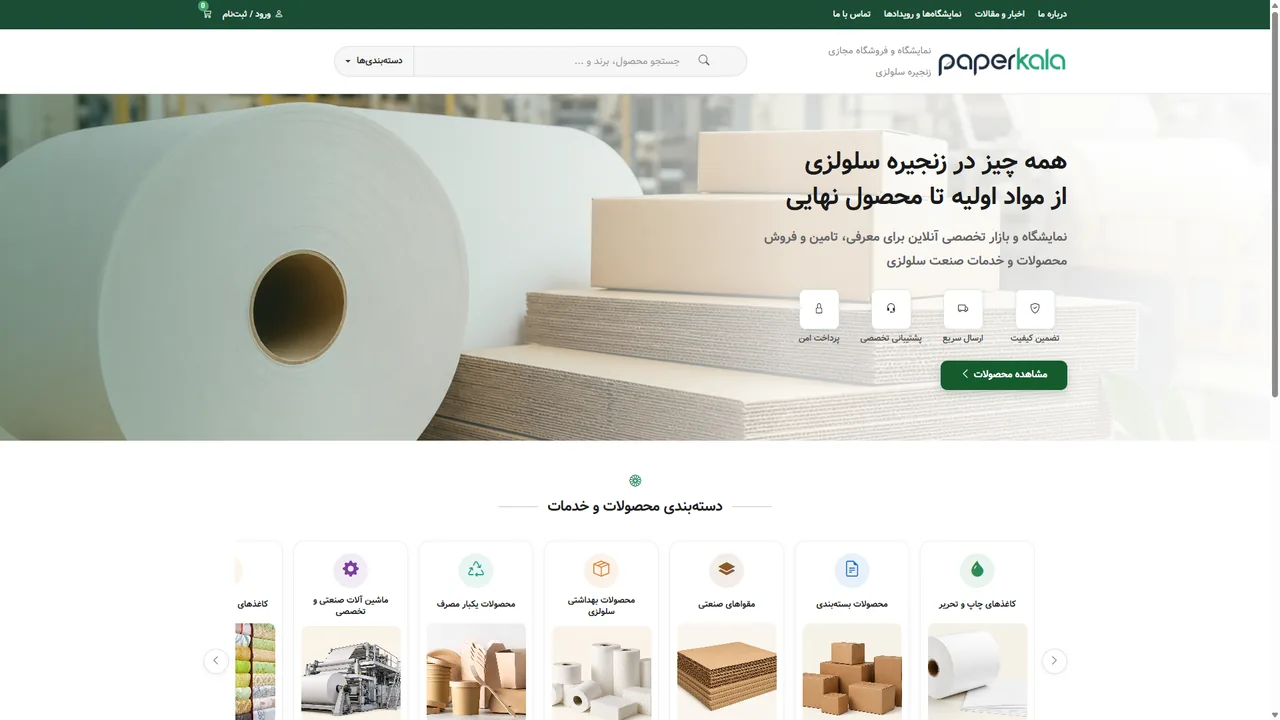
Live store examples below were delivered in Iran. They are real sites, not invented foreign case studies. We do not invent revenue, conversion, or ranking results.
For company context see About IlyaWeb. For a dedicated inquiry page see Contact.
Portfolio
Live IlyaWeb projects
These sites are online. Screenshots show each homepage. They were delivered in Iran and are not presented as local client references for other markets.
We do not invent client names, rankings, traffic, or revenue. Request a consultation
WooCommerce or custom development — which should I choose?
WooCommerce suits many conventional retail and content-led stores. Choose custom when pricing rules, workflows, or integrations cannot be delivered efficiently on a standard stack. We recommend based on discovery, not preference alone.
Can the store support multiple languages?
Yes, when languages are planned in the scope. Product content, navigation, and checkout strings need a deliberate structure — not a late add-on.
Can I manage products and orders myself?
Usually yes on WooCommerce, after handover and any agreed training. Custom platforms include an admin experience defined in the written scope.
Which payment gateways can be integrated?
Gateways available for your merchant eligibility, target markets, and technical stack. Exact providers are confirmed during scoping — we do not promise a specific provider without verification.
Can the store connect to inventory or accounting software?
Often, when APIs, credentials, and business rules are available. Integration effort is discovered before a firm quote.
How is the project price determined?
International projects use a starting estimate or custom quote in USD. Catalog size, variants, design, checkout, payments, shipping, languages, integrations, and migration all affect cost.
Can an existing store be redesigned or migrated?
Yes. We review catalog quality, URLs, plugins or custom code, and operations, then propose redesign, rebuild, or platform change.
Is technical SEO included?
Technical SEO foundations for store structure, templates, mobile, and crawlability are included when scoped. Marketing SEO campaigns and ranking guarantees are separate — and we do not guarantee rankings or sales.
Who owns the website and source code?
Ownership and handover terms are defined in the written project agreement. Confirm the exact wording before development starts.
Is ongoing maintenance available?
Yes, as an optional agreement after launch. Updates, monitoring, and store improvements are covered only when included — see our support page.
What information do you need for a quotation?
Approximate product count and variants, target markets, languages, payment and shipping needs, existing site URL if any, and must-have integrations or workflows.
Contact
Plan your online store
Describe your catalog, markets, and must-have integrations. We typically reply within one business day. Submitting opens WhatsApp or Telegram with your inquiry — or email info@ilyaweb.com.
Address
- DubaiBusiness Bay, Al Abraj Street
- LondonCanary Wharf, South Colonnade
- New YorkMidtown, Madison Avenue
In-person visits by appointment only